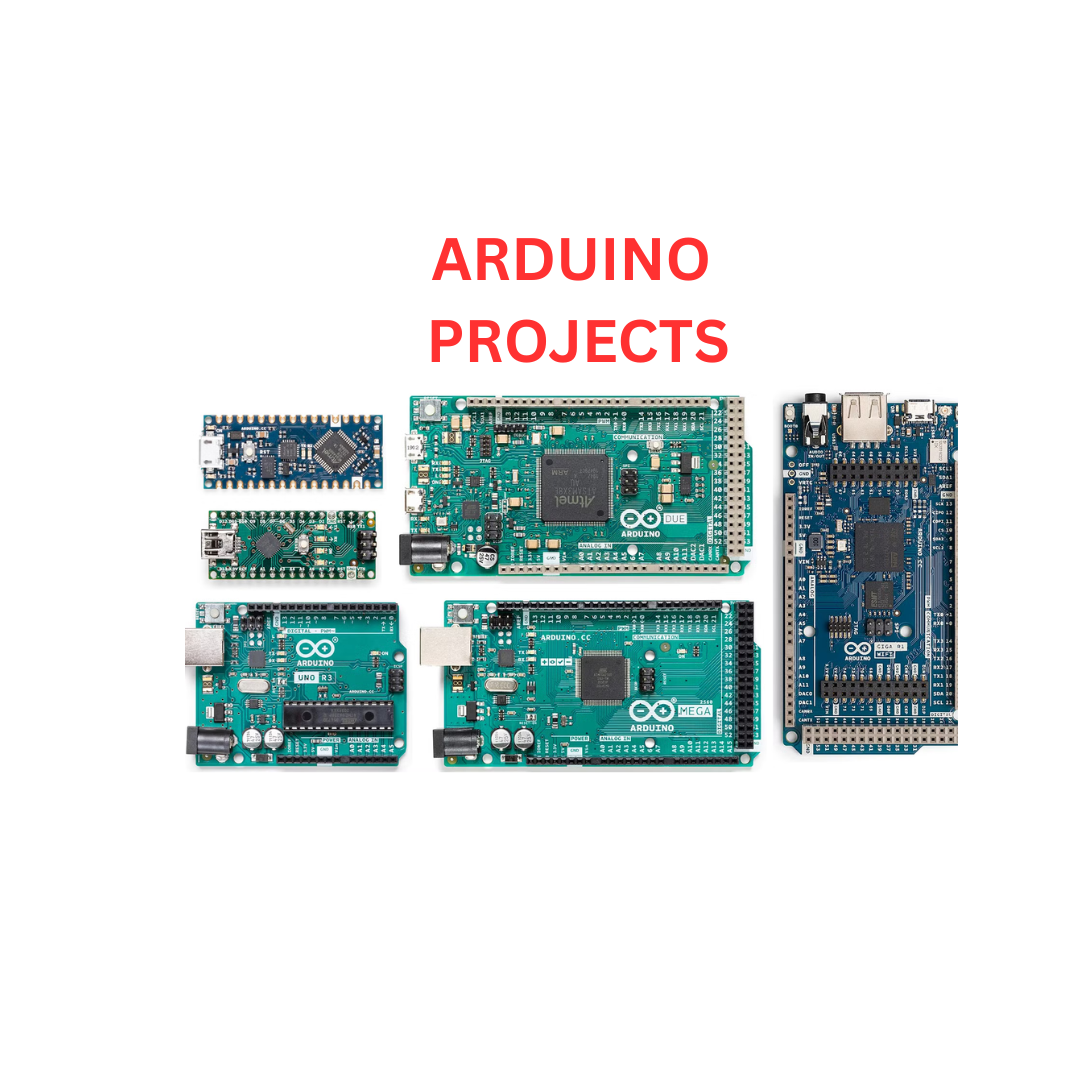
ARDUINO
Abstract: A large number of sanitation workers die every year due to erratic and lack of facilities available, and harmful toxic gases released while cleaning the sewage. Real time health monitoring systems for such workers will prove helpful. This real time health monitoring device will work in a sewage as a safety equipment. In this paper, the device presented will monitor the pulse rate of a person using a pulse oximetry sensor, the methane concentration and the atmospheric oxygen concentration and provide alert to worker and exterior unit. when parameters deviate from the safe range. This parameters in real time will promptly alert the workers to stay safe and detect toxic gases before any harm.
Abstract—The need for smart home warning systems is in high demand nowadays as they are used to warn owners about undesired situations that could happen while they are far away from their homes. This paper aims to present the design and implementation of an Arduino based smart home warning system. In this system, Arduino Uno microcontroller has been used with several compatible sensors (DHT22, MQ2, and camera), actuators (buzzer and relays with attached water valve, air fan, and light bulb), and GSM as a wireless communication medium to enable the interaction between users and the proposed system. The experimental results of using the proposed system show that a variety of undesired events can be detected efficiently. Fire, gas leakage, and housebreaking situations can be detected and users get notified about them via SMS messages, emails with attached pictures, etc. Besides, some proper actions can also be performed by the proposed system including stopping fire via water and decreasing gas concentration via air ventilation. The proposed system is very useful to prevent losses in resources and human life caused by unwanted events.
Abstract— Internet of Things (IoT) consists of devices that connect to the internet and communicate with each other. It enables these devices to collect and exchange data with a consumer. This paper presents an IoT-based Smart Garden with Weather Station system, which can be used to monitor the growth of plant every day and predict the probability for raining. Why this IoT-based device is been created? Many people are interested in growing the plants are always forget on watering the plants. Hence, in this study, the device is equipped with a water pump, where it can be monitored and controlled by using a smartphone. In addition, the devices also consist of four main sensors, which are Barometric Pressure, DHT11 Temperature, and Humidity Sensor, Soil Moisture Sensor and Light intensity module sensor. The Soil and Light Intensity sensor used to measure the value by percentages. Besides, two actuators, which are the water pump and LED light can be used remotely or by using a button on the devices. The LED is purposely to replicate the sunlight and make the plant grow faster. This IoT-based Smart Garden with Weather Station System can record the data and send the result to user through the smartphone application named as Blynk apps. This research is beneficial, and the system can be easily managed by all users such as researcher or farmer, and children.
Abstract-- In the advancing world, it is very crucial to protect our environment. Many incidents of man-made and natural disasters were happening around the world. Forest fires are one such catastrophe for environment. Once the fire inside deep forest starts, it burns and destroys everything and spreads everywhere within the forest. Fire spreads on hot days destroys trees and grasses due to drought conditions peaks in a forest region. Such forest fires disasters should be curbed in order to protect fauna and flora habitats in the forest. The objective of this work is to design and implement an IoT based system which is self-sustaining and would predict and detect the forest fires and sends the exact location to concerned officials which would help fire fighting personnel to extinguish the fire in the location where it starts slowly. This would prevent the fire to spread over a huge area and also able to take precautionary measures in order to prevent the fire which may occur in near future.
Abstract—Internet of Things (IoT) is a worldwide system of “smart devices” that can sense and connect with their surroundings and interact with users and other systems. Global air pollution is one of the major concerns of our era. Existing monitoring systems have inferior precision, low sensitivity, and require laboratory analysis. Therefore, improved monitoring systems are needed. To overcome the problems of existing systems, we propose a three-phase air pollution monitoring system. An IoT kit was prepared using gas sensors, Arduino IDE (Integrated Development Environment), and a Wi-Fi module. This kit can be physically placed in various cities to monitoring air pollution. The gas sensors gather data from air and forward the data to the Arduino IDE. The Arduino IDE transmits the data to the cloud via the Wi-Fi module. We also developed an Android application termed IoT-Mobair so that users can access relevant air quality data from the cloud. If a user is traveling to a destination, the pollution level of the entire route is predicted, and a warning is displayed if the pollution level is too high. The proposed system is analogous to Google Traffic or the Navigation application of Google Maps. Furthermore, air quality data can be used to predict future air quality index (AQI) levels.
This project presents the bus stop remainder using the RF reader. From this RFID we can remain the bus number to the blind person at the bus stop. It will use full for the blind person I cities side Arduino Uno microcontroller is using read the value form RFID when the bus will come nearby bus stop means the RFID reader will read the tag number each tag have a separate number in this project that number should be played voice recording module and one more future was added in this project bus routes also played by voice recorder. The LCD display displayed the last reached bus number it will use full for a normal person of cities
Electrically powered street lighting has brought a sense of wellbeing and freedom from risk or danger but Street lights in town centers, traffic lights and pedestrian crossings stay on all night. This amount of lighting is not required in that it adds no benefit to the community. Continuous ON state of street light leds to power wastage. In other case, it is getting very difficult to analyze the failure of street lights in all places. In these kinds of situation effects of crime will be increasing. In our proposed project work we have analyzed these problems.